
Object Record
Images
Metadata
Object |
Statue |
Title |
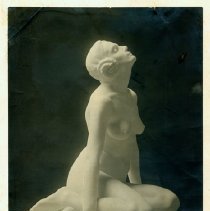
Nirvana |
Artist/Creator |
Hunt, Clyde du Vernet |
Date |
1920 |
Description |
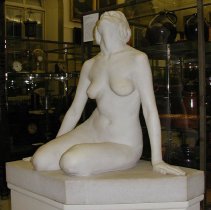
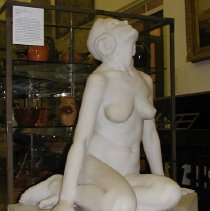
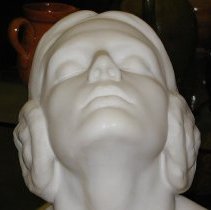
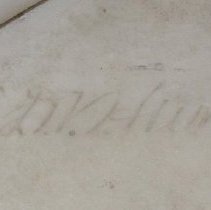
White marble statue of nude female gazing upward, hair braided and twisted in buns on either side of head, titled "Nirvana." Few dark imperfections in marble. Meant to be an allegory of Nirvana, the Buddhist concept of absolute inner calm and perfect faith. Sculpted by Clyde Du Vernet Hunt (1861-1941), a native of Weathersfield, Vermont. "C.D.V. Hunt" carved next to her left leg, and between her hand and that leg. |
Width (inches) |
23.000 |
Height (inches) |
38.500 |
Length (inches) |
36.500 |
Information |
Clyde Du Vernet Hunt, a native of Weathersfield, Vermont, learned to draw and appreciate art from his famous uncle, William Morris Hunt. In the 1890s he moved to Paris to study with academic sculptors such as Jean Paul Laurens, Benjamin Constant, and Jules Coutan. Nirvana, a prime example of academic nude sculpture, symbolizes the Buddhist concept of absolute inner peace and perfect faith. In 1928 Hunt incorporated this sculpture into the Lincoln group, now on display in the museum courtyard, as an allegory for faith. As part of the Lincoln trilogy, Nirvana was prominently displayed at the entrance of the Grand Palais in Paris before Hunt’s return to America in 1938. |
Related People |
Hunt, Clyde du Vernet |
Credit line |
Gift of Mr. Leavitt J. Hunt, Esq. |
Catalog Number |
2001.31 |