Person Record
Images
Metadata
Name |
Hunt, Leavitt |
Date Born |
02/22/1830 |
Birthplace |
Brattleboro, Vermont |
Deceased |
02/16/1907 |
Place of Death |
Weathersfield, Vermont |
Father |
Hunt, Jonathan |
Mother |
Hunt, Jane Maria Leavitt |
Spouse |
Hunt, Katherine Jarvis |
Children |
Hunt, Clyde du Vernet Hunt, Jarvis Patterson, Maude Dacre Hunt Hunt, Nina Hunt, Leavitt Jarvis Hunt, Morris B. |
Places of Residence |
Weathersfield Bow, Vermont |
Education |
Boston Latin School University of Heidelberg Swiss Military Academy Harvard |
Occupation |
Lawyer |
Notes |
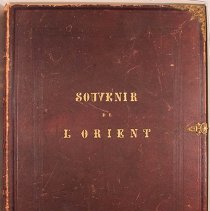
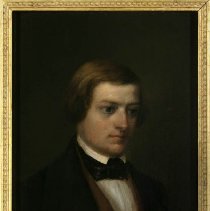
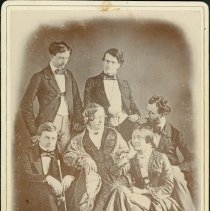
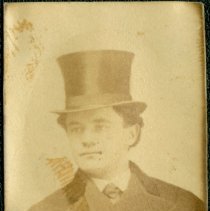
Leavitt, the youngest of the Hunt children, began his formal schooling while the family traveled in Europe. At the age of fourteen he and his brother Richard were enrolled in Alphonse Briquet's military boarding school outside Geneva, Switzerland. Proud of their New England heritage, the brothers referred to themselves as the Green Mountain Boys. Leavitt's first introduction to philology took place at this school. He later continued his study of Persian languages, law, and theology in Heidelberg, Germany from 1846 to 1847. After a trip back to the United States Leavitt passed his law exams in 1851. With his friend Nathan Baker, Leavitt spent the winter of 1851-1852 traveling throughout Egypt and the Near East. On this trip he took a large number of photographs, documenting many of these areas for the first time. After returning to Europe he printed the negatives using the fragile calotype process. His initial plan was to sell the albums of the photographs in the United States, but this venture proved unfeasible. His photographs served to influence the architecture and art of his older brothers and expose the east to a wide number of Gilded-Age thinkers and artists. Leavitt returned to the United States in 1855 and studied for a second law degree from Harvard. In 1860 he married Katherine Jarvis, daughter of Consul-General William Jarvis of Weathersfield, Vermont. The young family moved into the Jarvis estate where Merino Sheep and Holstein Cattle were being introduced to the United States for the first time. Leavitt enlisted in the Army of the Potomac at the outbreak of the Civil war and served for the duration of the conflict. After the war Leavitt set up a law practice in New York and speculated in western real estate. His business ventures all seemed to fail and he resigned himself to the life of a country gentleman on the banks of the Connecticut River. He spent the rest of his days writing poetry and prose for local and national publications. A lingering war injury caused him to spend the last twelve years of his life blind. Leavitt is buried in the cemetery at Weathersfield Bow, Vermont. He was fluent in French, German, Italian, Latin, Greek and Hebrew, and could write in both Persian and Sanskrit. |